The power of Product Line Engineering: Architecting mission and market adaptability with supersets
Because nobody ever builds one flavor of anything
Eli Wilson, VP of Growth
Walk down the cereal aisle. Stroll past the freezers at Baskin-Robbins. Visit a car dealership. What do you notice? Nobody makes just one.
Cereal isn’t one box – it’s dozens of variations built from a handful of grains and sweeteners
Ice cream isn’t just vanilla, it’s 32 flavors (and then some) spun from a common base recipe
Cars aren’t one-off prototypes – they’re a family of trims and options all built on shared platforms
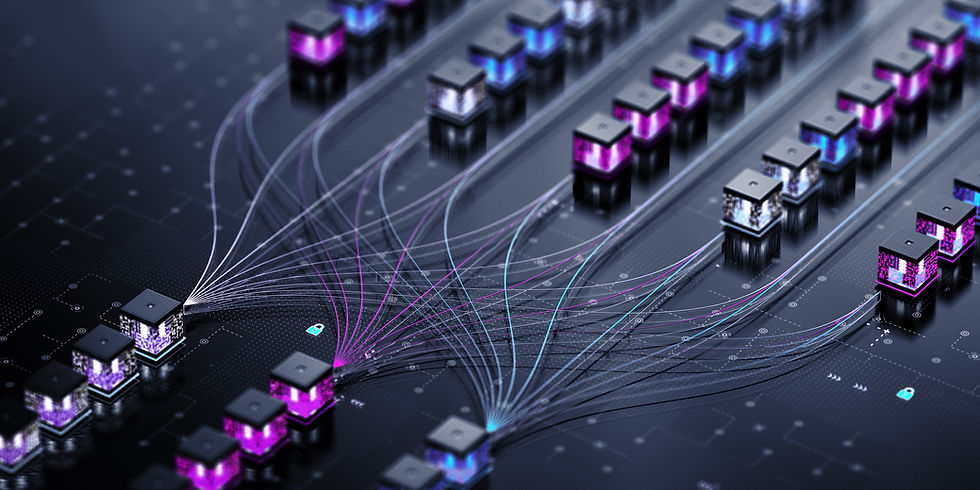
This is the superset mindset at work – the ability to define a broad foundation of ingredients, architectures and platforms, then configure subsets tailored to specific customers, missions or markets.
In defense and aerospace, we’ve often fallen into the trap of “subset thinking”. When managing disparate programs or systems across service areas, it’s easy to approach each project as unique, only to rediscover the same requirements, interfaces and tradeoffs repeatedly. Product line engineering (PLE) turns that inefficiency on its head. The superset is a model that allows for variations of requirements, architectures, behavior and test cases all within the same product family–creating a living library that enables rapid adaptation, variant creation and mission-tailored solutions.
MISSION ADAPTABILITY IN ACTION
Mission adaptability isn’t a buzzword. It’s what keeps both the warfighter and the consumer equipped with the best configuration of capability to accomplish their mission.
In the home: A family grocery run is never one-size-fits-all. Parents of picky eaters accommodate the household by buying a favorite cereal for one child, jars of Nutella for another, and comfort food for themselves – all subsets of a shared superset pantry. The goal isn’t variety for its own sake; it’s making sure each member of the household has what they need to thrive.
On the battlefield: A cannon artillery system may look uniform, but in reality, it must be configured for terrain, range, target type, and mission tempo. This involves selecting appropriate ammunition types, adjusting fire control settings, and coordinating with support vehicles –all of which operate as interconnected components within a larger superset architecture designed for operational effectiveness. Those configurations can come down to the smallest of details. Artillery fuzes are a perfect example. The same projectile can be fitted with:
Impact fuzes for direct detonation on target
Delay fuzes for penetrating structures before exploding
Proximity or airburst fuzes for effects above ground or against dispersed troops
Programmable multi-function fuzes that allow tailoring in the field
You don’t redesign the munition for each mission—you configure it. That’s PLE in action: a superset of interfaces and standards that enables variants to be swapped in and out as needed, reducing logistics burdens while maximizing operational flexibility.
THE VALUE OF SUPERSET THINKING
With PLE, projects stop being isolated “flavors” of capability. Instead, every program becomes a subset of a broader superset architecture. The value is clear:
Speed → Variants are configured, not re-engineered
Consistency → Shared baselines preserve technical quality
Agility → Capabilities adapt as missions, markets, and threats evolve
Resilience → Knowledge is institutionalized, not trapped in individual projects
In short: Projects meet the needs of today. Supersets prepare you for the needs of tomorrow.
WHY IT MATTERS
Whether you’re buying groceries for a household of diverse tastes or conducting a fire mission with cannon artillery, adaptability decides the outcome. PLE makes that adaptability repeatable, efficient and sustainable—giving leaders the power to configure, not reinvent.
BEYOND SYSTEMS: SUPERSET THINKING FOR ECOSYSTEMS
PLE isn’t just for weapon systems or consumer products. The same superset mindset applies to the digital engineering ecosystem itself. Toolchains, models, workflows and data streams shouldn’t be reinvented for every program. Leaders who architect their ecosystem as a product line gain the ability to:
Configure capabilities instead of re-engineering them
Eliminate overlaps and redundancies in tools and processes
Scale architectures that are compliant, cost-effective and adaptable to changing missions
Consider the TurboTax model: it captures the full tax code as a superset, then allows users to select what's relevant—married filing jointly, head of household, specific deductions. Product families should work the same way. Is this air vehicle manned or unmanned? What type of payload does it carry? What mission sets is it designed for? Select each configuration, and your PLE framework develops the right requirements, standards, architecture and behavior based on those selections. This drastically simplifies what the organization needs to manage when grouped into a variant model representing the superset of all products within that family.
The lesson is clear: projects deliver subsets. Leaders architect supersets. That’s how organizations turn uncertainty into advantage.


